 Part of the BERNINA family
Thread is more than colour.
Thread has to pass through the machine, the needle and the fabric, then hold the seam once the project is used. A calmer thread direction can make sewing feel steadier and more consistent.
For many beginner projects, a good-quality all-purpose polyester thread is the broad everyday option. Decorative or specialist effects usually need more thought and more testing.
If thread keeps breaking, looping or looking untidy, it may be one clue in the setup rather than the whole answer on its own.
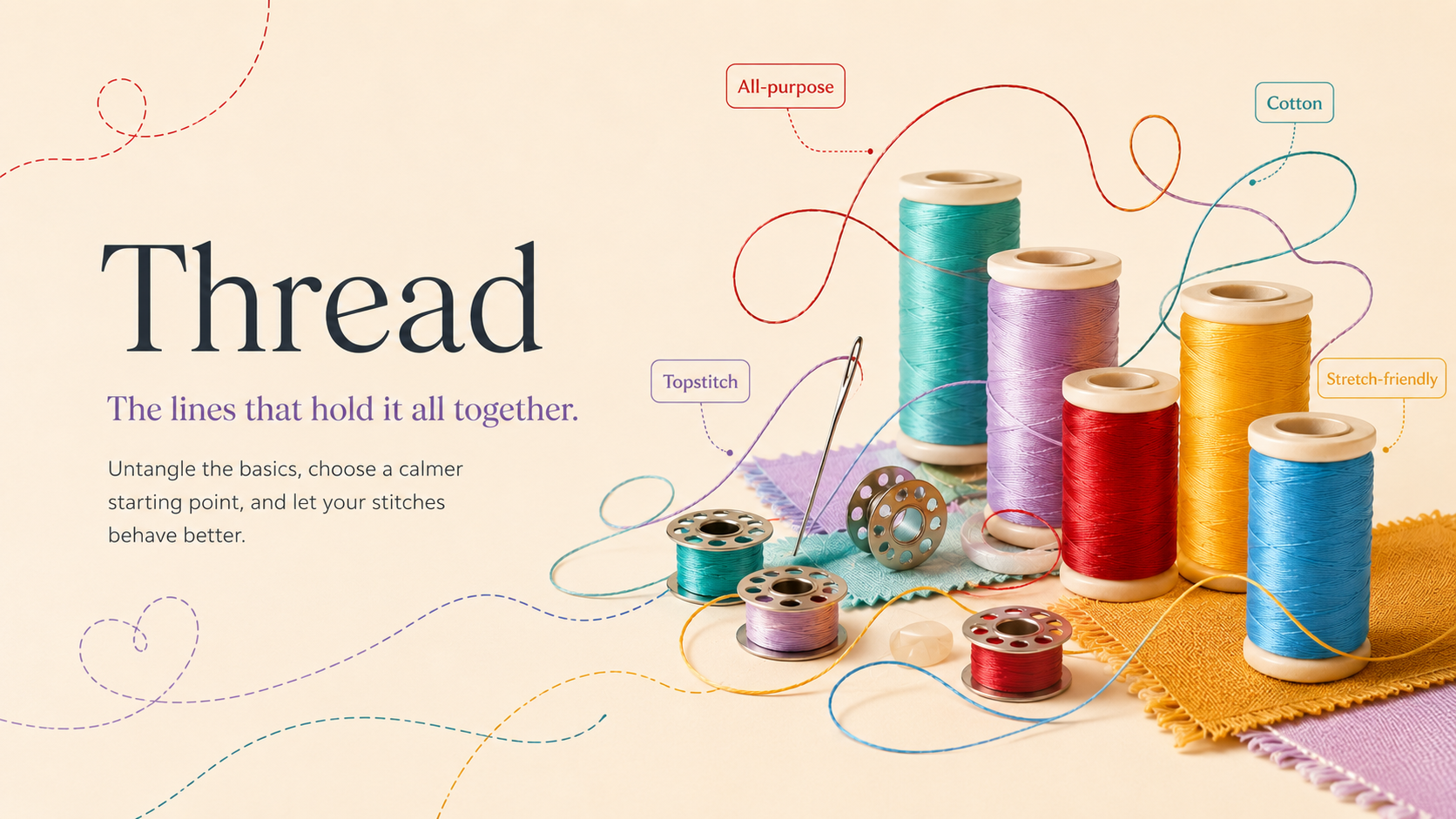
Thread works inside the Stitch Triangle.
Thread choice should support the project, the fabric, the needle and the stitch test. It should not become a separate guessing game before the sewist knows what they are actually making.
All-purpose polyester
A broad everyday option for many beginner and general sewing projects when paired with a suitable fabric, needle and stitch test.
Topstitching or visible finish
If the stitching will show, test colour, stitch length, neatness and thread behaviour before sewing the visible area.
Stretch-aware sewing
Thread matters, but stretch projects also need the right needle and stitch choice so the seam can move with the fabric.
Fine or delicate fabric
Fine fabric may show puckering, tension issues or seam visibility more easily. Keep the approach test-first and gentler.
Specialist thread
Decorative, heavy, metallic or specialist thread should not be the beginner-core option. Test first and ask when unsure.
Thread can be one clue
Thread breaks, looping or bunching can have several causes. Check threading, needle, bobbin, fabric, lint and test fabric before assuming one fixed answer.
When thread may be part of the problem
- The thread keeps snapping
- The stitch looks loopy or untidy
- The spool seems fluffy, dusty or unreliable
- The seam looks harsher than it should on the real fabric
Calmer checks before changing everything
- Rethread properly before making bigger assumptions
- Check whether the needle and thread suit each other
- Check whether the fabric is making the stitch look worse
- Test on the real layers, not only a random scrap
Test the thread in the real setup.
Use the same fabric, the same layers, the same needle direction and the same thread direction you plan to use on the real project. The test stitch is where the match proves itself.
Choose what helps most right now
I need the full setup to make sense
Best when fabric, needle, thread and stitch need to be understood together rather than guessed one by one.
I want project-led setup help
Best when you know what you want to make, but need help matching the fabric and setup more safely.
I think I need more specific help
Best when the thread problem still feels too specific, too frustrating or too unclear for a broad help page.