 Part of the BERNINA family
Choose fabric for the project, not just the colour.
Fabric is often the first big setup clue. A pouch, cushion, stretch item, tote bag and protective cover do not all ask the same thing from fabric.
This page helps you think about fabric behaviour before you blame yourself, the machine or the thread.
The better first question is not only what fabric this is. It is also what you need the fabric to do.
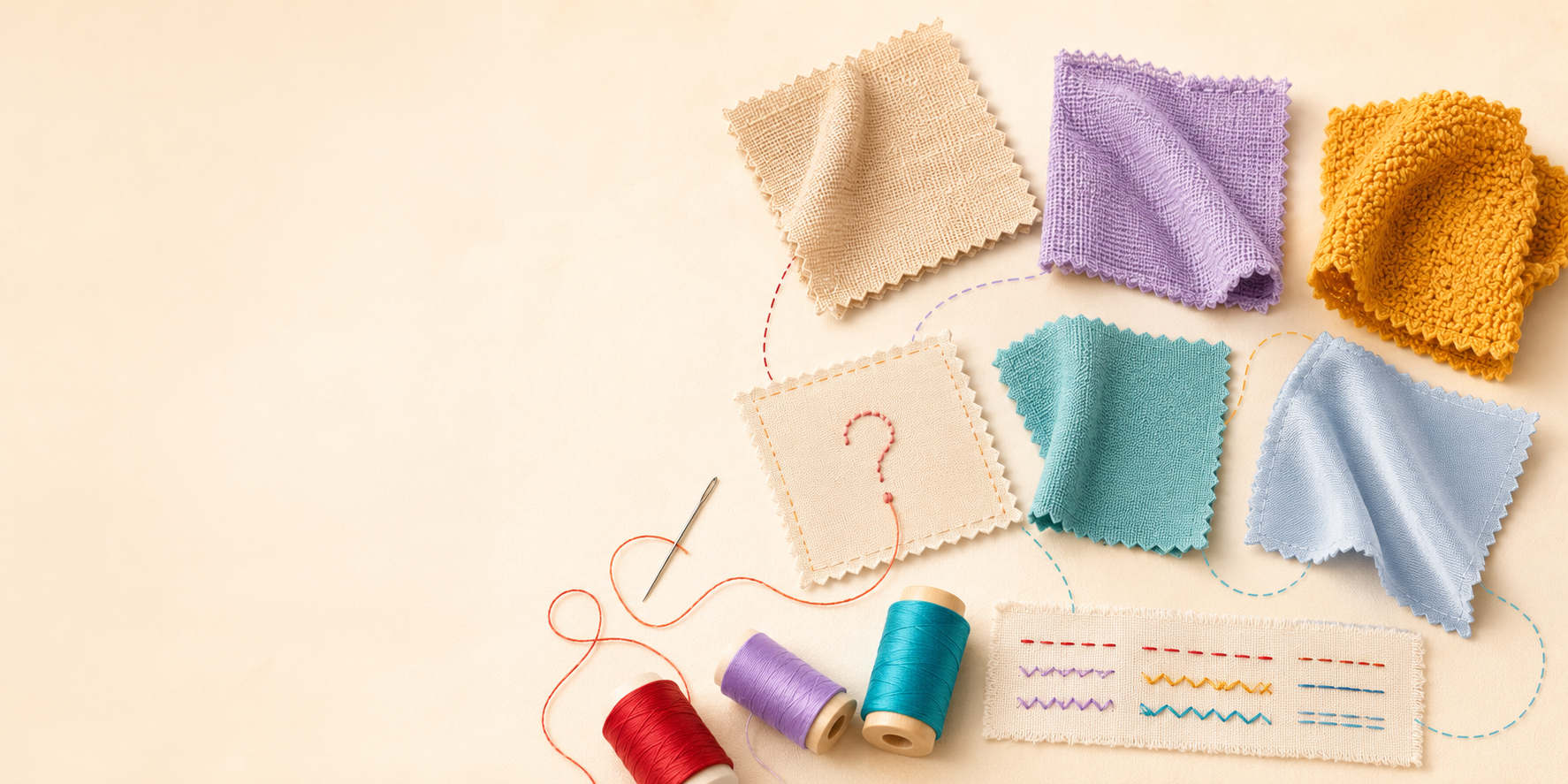
Project chooses the fabric direction.
A fabric can feel easy in one project and awkward in another. Stable cotton may be lovely for a pouch. Stretch fabric may be better for something that needs movement. Thick canvas may suit a utility item, but seam bulk can make it harder on the machine.
That is why the calmer first question is not only what fabric is this. It is also what do I want this fabric to do.
Stable woven
Often a kinder starting place for stitch samplers, simple pouches, cushion covers, placemats, simple bags and many home items.
Still check weight, fraying, seam bulk, weave and how the real layers behave.
Stretch or knit
Useful when the project needs stretch, recovery or comfort, but it usually needs a stretch-aware needle and stitch choice too.
Slow down when fit, body movement or seam stretch matters.
Denim, canvas or thicker woven
Useful for some bags and utility items, but the thickest seam is the real test rather than one flat piece on its own.
Check seam bulk and machine capability before committing.
Light, fine, slippery or drapey
Beautiful fabric, but it may shift, pucker, mark, snag or make cutting and visible stitching harder.
Not impossible. Just not usually the calmest first version of the project.
Coated, leather-look or specialist
Coatings, permanent needle holes, surface drag, thickness and machine stress can change the setup completely.
Use advice before cutting the real fabric.
Mystery fabric
If you do not know how it behaves yet, the safest clue is still a small stitch test on a scrap.
Check stretch, fraying, puckering, needle marks and layer behaviour before trusting it.
What fabric changes most
- How easy the project feels to control
- Which needle direction makes sense
- What thread and stitch are likely to behave well
- How much seam bulk and handling pressure the machine must deal with
What beginners often do too soon
- Choose fabric only for colour or print
- Pick the trickiest fabric for the very first version
- Assume one project behaves the same in every fabric
- Keep sewing when the fabric is clearly telling them to slow down
Choose the calmer first version.
If you want to make a pouch in slippery satin, the idea is not wrong. But a first pouch is usually calmer in stable woven fabric. Learn the project steps first, then come back to the trickier fabric when the construction feels familiar.
Choose what helps most right now
I need the full setup to make sense
Best when fabric, needle, thread and stitch need to be understood together instead of separately.
I want project-led fabric help
Best when you know what you want to make, but need help matching the fabric and setup more safely.
I think this fabric needs more specific help
Best when the fabric still feels too specialist, too stubborn or too unclear for a broad help page.